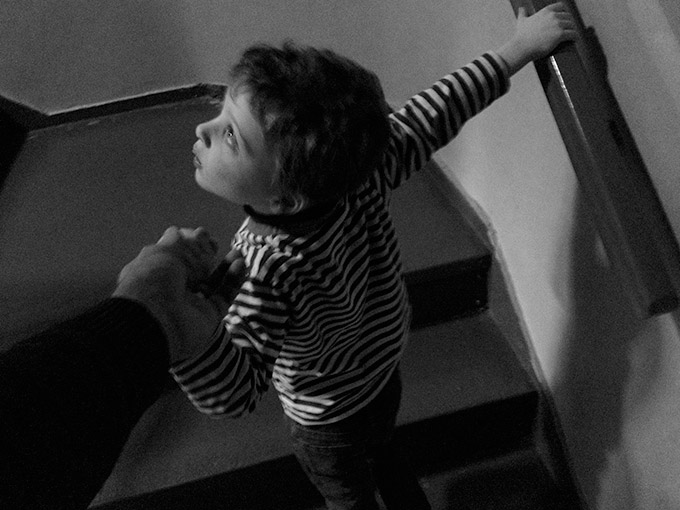
 In autism, a stim is anything done to the exclusion of other things, including interactions with others. Common ASD stims include hand flapping, playing with parts of a toy, repeating dialogue from a TV show or story, running in circles, etc. We all have tics, repetitious behaviors, and obsessions, but an autism stim is accompanied by a near total abandonment of the outside world; the person with autism is locked into their stim, perhaps finding comfort and peace in it.
One of C's stims is walking up and down stairs, something it seems he could do without end.
In our building, going up and down stairs has the added advantage of feeding C's hunger for numbers and systems. He happily announces each floor he reaches: "Third floor!" "Fifth Floor!" He rejoices at seeing the electrical junction boxes covered with indecipherable acronyms: "CUXW!" "CUXX!"
He leaves the stairwell on each floor to look at the doors of each apartment. He knows each unit number just by its location: I can cover the door and ask, "Which apartment is this?" "5H!" "2W!" He's never wrong, because he's memorized the floor plan. He recently said, "To you is under Merry Christmas." I thought he was getting the expression wrong, until I realized that the resident of 2U had put a Merry Christmas sign over their unit number. "2U" was under Merry Christmas after all!
Now that it's winter and we can't go out as often, I take C on these stairway missions at least once a day. I join him in his stim. He holds my hand, talks about each floor, and leads the way. I've incorporated something else into our journey: every so often, we stop on a landing and just sit peacefully together, away from so many other distractions. I let him initiate the conversation. Neighbors passing by us in the stairwell must think we're a little odd.
It was on just such an adventure a couple weeks ago, during one of these pitstops, that C said, out of the blue, "Daddy, are you scared of the yellow line?" (There is a painted yellow line on the seventh floor landing, and crossing it triggers a very loud, jarring alarm. This happened once, and the twins remain quite frightened of the infamous Yellow Line.)
Daddy, are you scared of the yellow line?
Let's reflect on his question for a moment. First, it was totally unprompted; I didn't need to coax it out of him, or otherwise try to get him to engage with me. Second, he was referring to me (by name, no less), whereas he rarely refers to others. Third, and perhaps most amazingly, he asked me about my feelings, my thoughts. He wanted to know where I stood on an issue.
I was blown away, and found it hard to stifle a joyous yelp as I said, "No, C, I'm not afraid of the yellow line." That was the end of our little exchange, as he promptly jumped up to continue exploring the stairwell, but it was enough to give me newfound hope.
It's hard for many parents to understand what it feels like to raise a child who seemingly has zero interest in their very existence, but this is a daily reality for many parents of children with autism. We have to take it on faith that they want to know us; we have to trust that we matter to them. And then something like this occurs, something that affirms our hope and trust.
So why did this happen? I believe it's because I went along on C's journey — I didn't force him to go on mine. He saw me as a compatriot, a partner. Instead of me forcing him to be part of my world, for a little while I joined his, and this made him comfortable enough to engage me directly on his own terms.
Those familiar with the Sonrise program know this type of interaction — joining in the stim — is a key element of that philosophy. We aren't doing Sonrise in any kind of formal fashion, but we are learning some of their lessons online, from books, and from other parents. Good stuff, and well worth incorporating into any strategy.
In the meantime, I intend to keep joining C in his stims...until he's ready to join me in mine.

 When the evaluator finished telling us that, yes, C definitely had autism, I asked what this meant for his future. She sighed, said that was a common question, and then offered us the best advice we've received so far: "Don't try to predict where your son will be in ten years, one year, or even a month. No one knows, and anyone who tells you they do is lying. These kids can surprise us, both for the better and the worse."
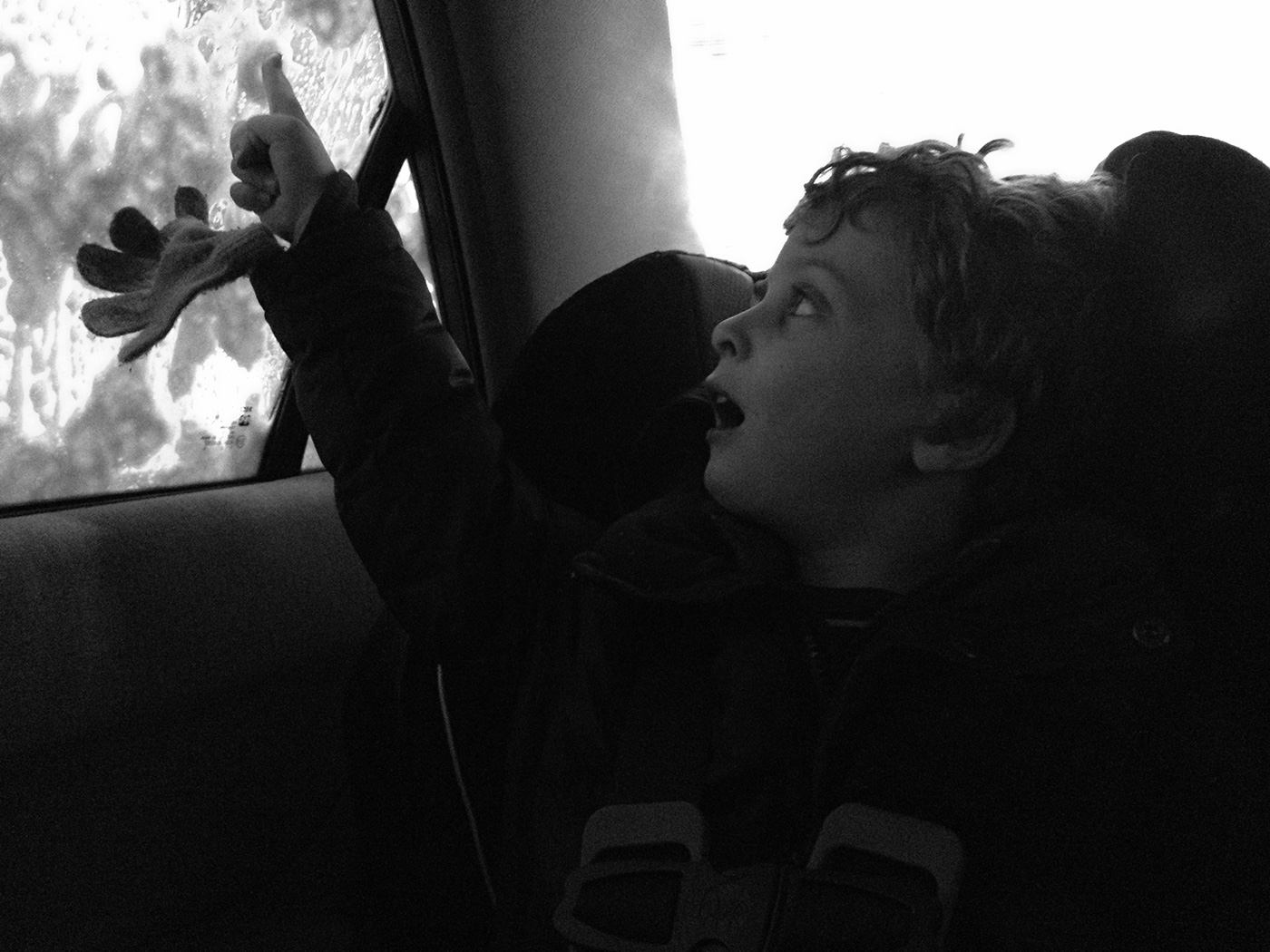 For my regular readers, I apologize for the shortage of posts lately. A lot is happening in life at the moment, most of it great, one thing bad (more on that in the near future), in addition to the usual craziness.
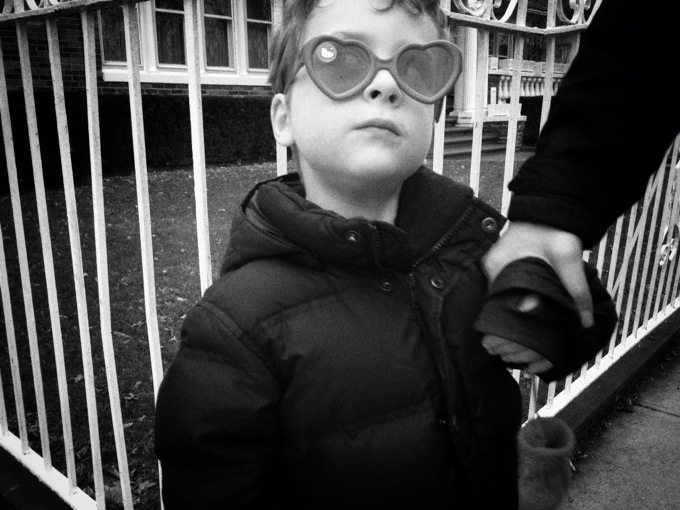 C has a sense of humor. A pretty good one, in fact. Most of his jokes involve some form of word play.
Quisque iaculis facilisis lacinia. Mauris euismod pellentesque tellus sit amet mollis.