
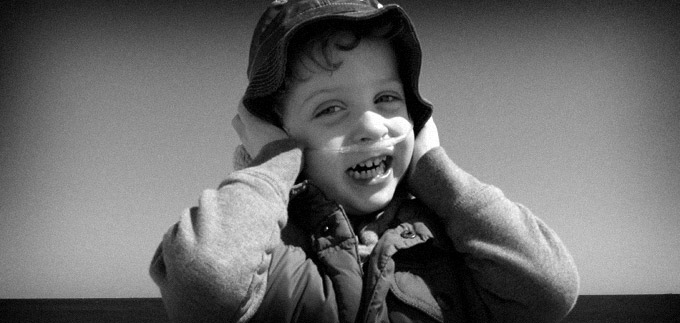
 Many children with autism, like C, love to engage with others, but their ASD prevents them from understanding how to do so. Most times C will light up if a child tries to engage with him, but if he's left alone he will find many ways to occupy himself, and usually happily so.
Nonetheless, it's hard to accept that he has no concept of social reciprocity. I suppose to some extent I'm projecting my desire that he not be lonely. And yet C hardly seems like a lonely boy.
While reading to the boys last night, I found solace in the following passage from Ferdinand:
Sometimes his mother, who was a cow, would worry about him. She was afraid he would be lonesome all by himself.
"Why don't you run and play with the other little bulls and skip and butt your head?" she would say.
But Ferdinand would shake his head. "I like it better here where I can sit just quietly and smell the flowers."
His mother saw that he was not lonesome, and because she was an understanding mother, even though she was a cow, she let him just sit there and be happy.
I don't want C to be lonely. I want him to be able to have friends if he wants. More than that, though, I want him to be happy; sometimes that means just letting things be as they are.

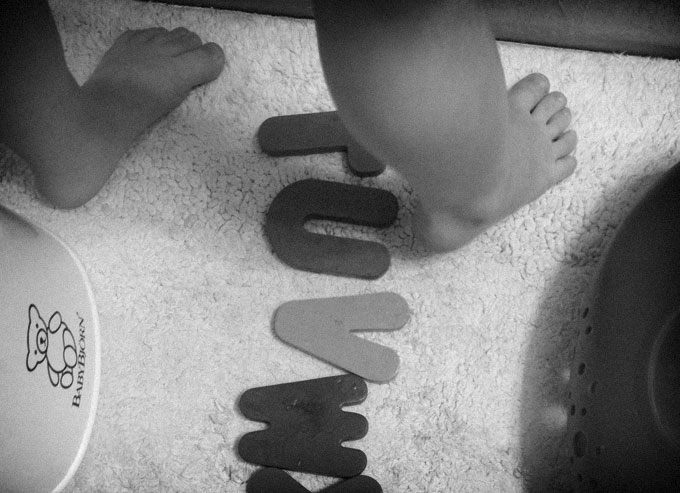 Today my wife observed C reciting the alphabet...backward. He would say a letter, scrunch up his face as he thought earnestly about what was next, and then happily announce it before proceeding to the next one.
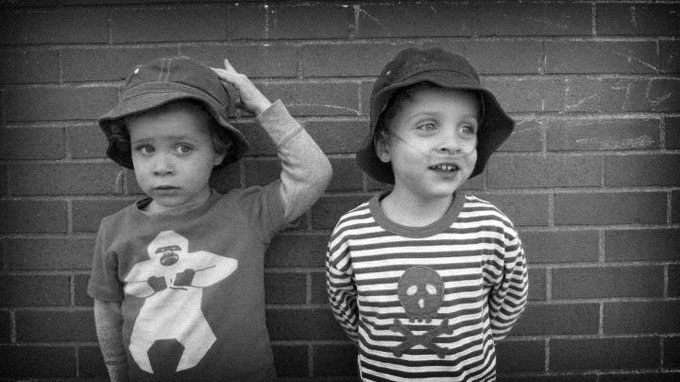 In the bath tonight, M said that C doesn't love him. When asked why he thought that, M said, simply, "Because he doesn't say it." And now it gets tough. You see, it's obvious to us how much C loves his brother, but this is one of those simple, human things C just can't do on his own. Sure, if we script it, he'll say it, but it's not spontaneous, and now even M is starting to notice.
Quisque iaculis facilisis lacinia. Mauris euismod pellentesque tellus sit amet mollis.