
A Happy Anniversary

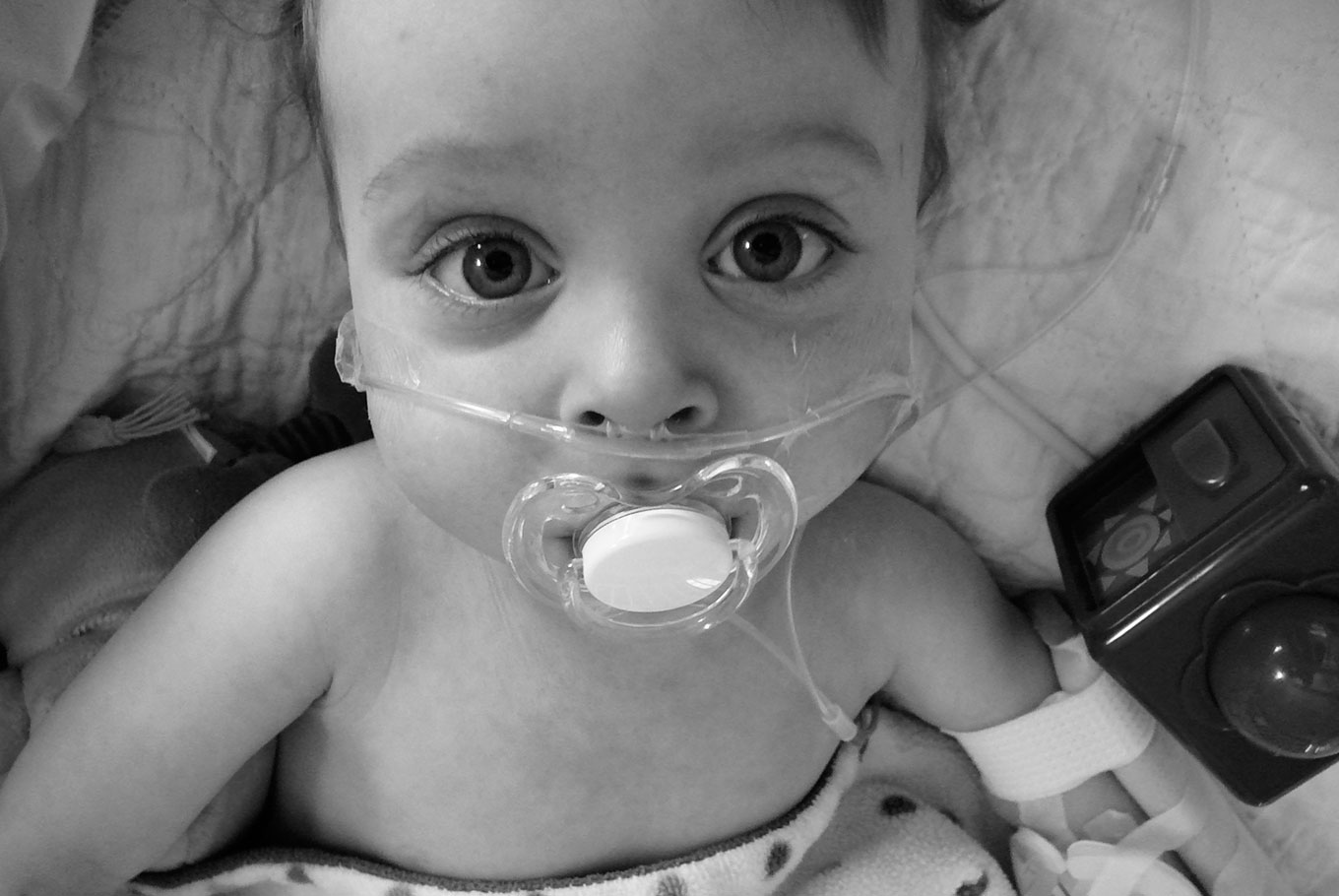
coxygen@2x It's hard to believe we lived over 2.5 years with 24/7 oxygen equipment — tanks, compressors, tubes — attached to our son no matter where we went. We kept explosive O2 tanks in our home, traveled with them in our car. We wrestled with yards of cumbersome (and tangle-some) tubing wherever we went. It wasn't easy and I didn't always handle it well, though C always did.

We'd constantly do oxygen math: "Okay, if we're going out for 2 hours, and he's at 1 liter per minute, we should be good with one or two tanks." "We have 7 full tanks in the closet, so if we only use two tanks a day we won't need another delivery for about three days."

We endured the stares of strangers who probably wondered why we were traveling with a tiny spaceman. We had prolonged hospital stays where we felt totally isolated and alone; scary periods where no one could tell us what was going on or if C would even survive; and watched as C was put under anesthesia a few times, including once for a lung biopsy.
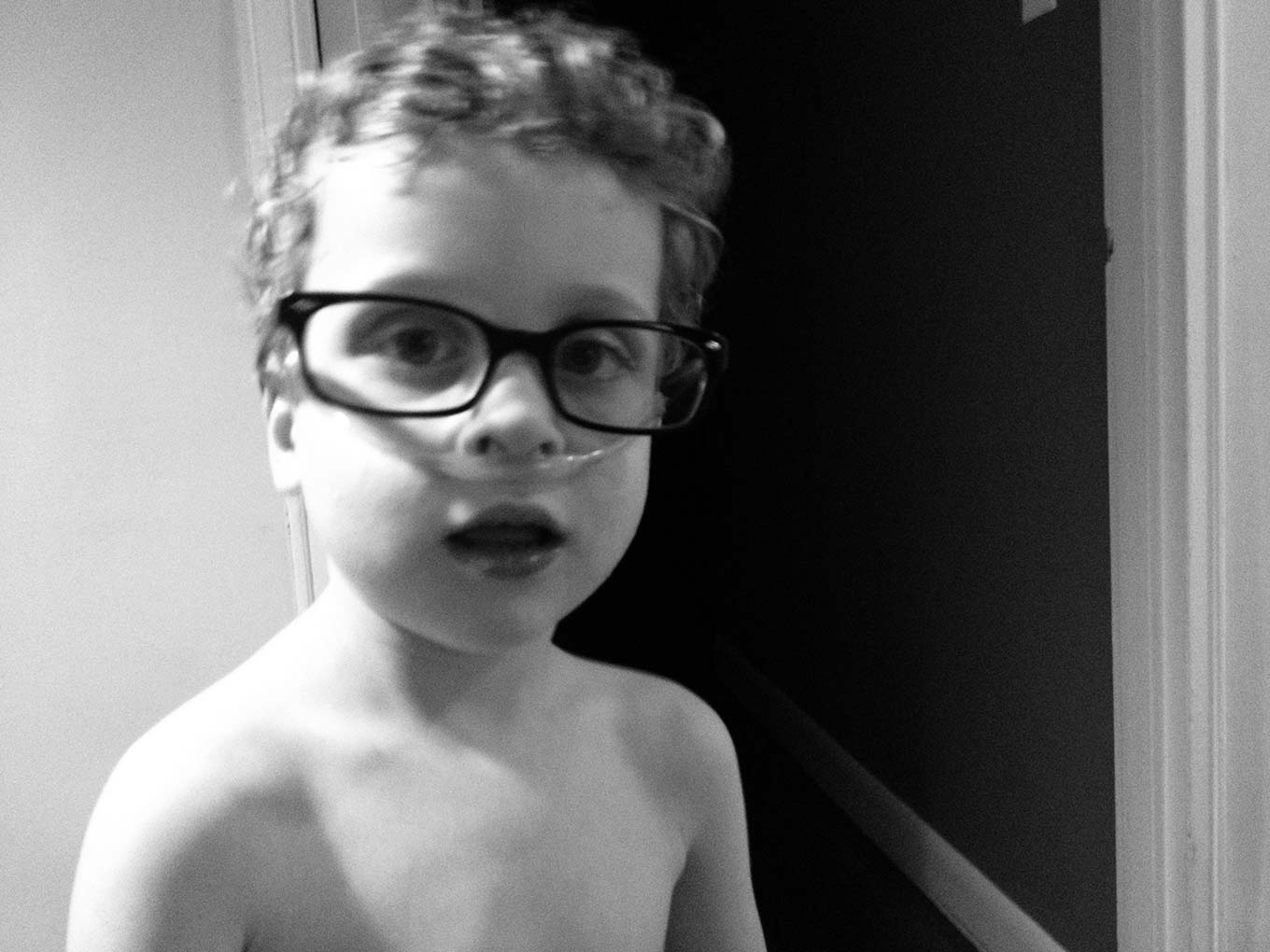
C last year hamming it up with my glasses and an oxygen tube.

But that's all over now. Last week was the one-year anniversary of our pulmonologist giving us the green light to take C off oxygen.

We still use a pulse oximeter at home and school to make sure C's "sats" — oxygen saturation levels — are good (they are). We still need to be careful about viruses and other airborne nasties. And we'll likely never know whether the disease is actually gone or simply in remission. Plus, there are still a couple more tests the specialists want to do — a sleep test and something called a hypoxic challenge test to see if C can travel on an airplane (C has never met his grandmother who lives in California because her health problems prevent her flying, and we still don't have the green light to put him on an airplane).

Still, things could have been so much worse, and for many of the parents we met through the chILD Foundation, they are.

So once again, as rough as things have been, we're grateful and appreciative for how they're turning out.

Stay healthy, C. Your parents are a little exhausted.
Not Even Wrong

notevenwrong@2x Shortly after C's diagnosis I began reading everything I could on autism. I focused on possible causes, potential therapies, and what we might do to make things better.

After a while, I needed a break; I wanted to read something that wasn't autism-related. One of the last books I read before C's diagnosis was The Murder of the Century by Paul Collins, a smart and insightful non-fiction account of early 20th century journalism and its handling of a terrible crime.

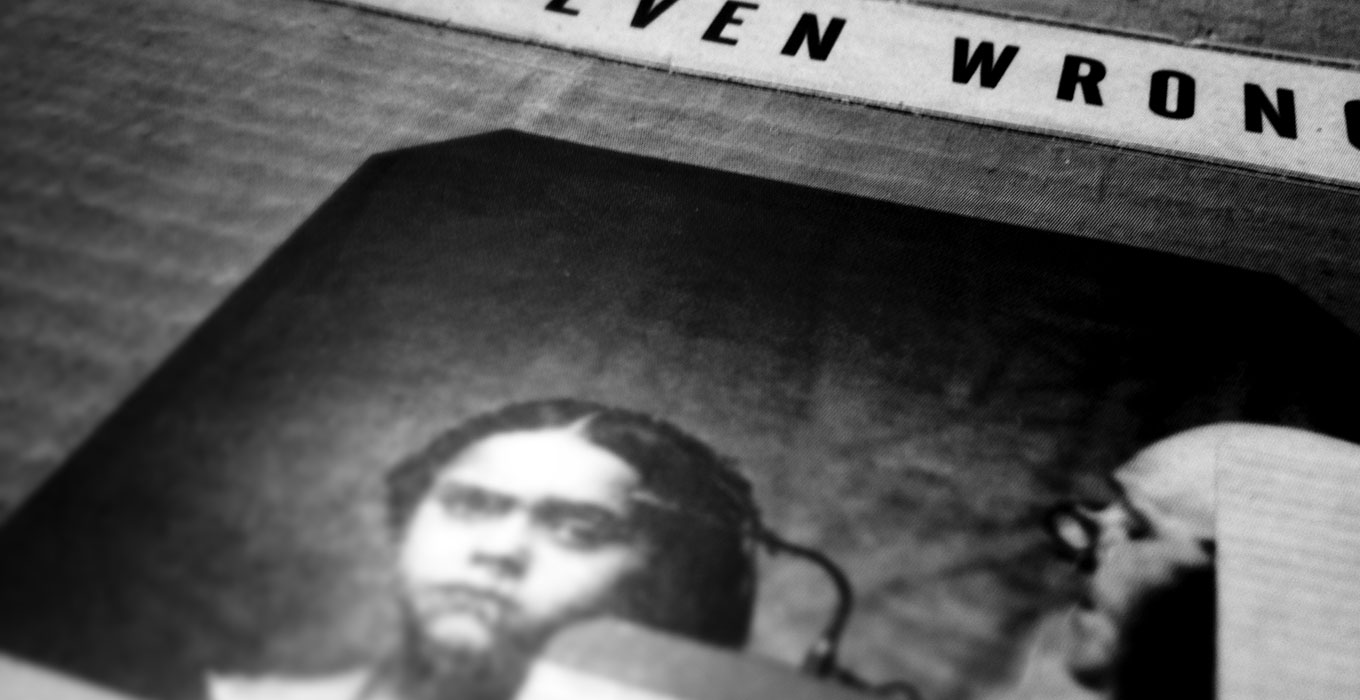
Since I liked his writing, I decided to look for other books by Collins. Imagine my surprise when I discovered that he'd also written Not Even Wrong: A Father's Journey into the Lost History of Autism. The reviews were glowing, and the back cover description enticing:

Not Even Wrong is a haunting journey into the borderlands of neurology — a meditation on what 'normal' is, and how human genius comes to us in strange and wonderful forms.

The book captivated me; besides being beautifully written and sincere, it's a touching account of a parent's journey shortly before, during, and after receiving an autism diagnosis. More, though, it provides a wonderful and telling history of autism, and paints fascinating portraits of historical figures, infamous and famous, who were likely autists themselves.

Not Even Wrong was the first thing I'd read — or even really experienced — that helped me come to grips with the diagnosis and even begin to embrace it. I'd like to describe this transformation, but I don't think I'd do it justice. Instead, I'll just cite a couple of passages that demonstrate the sorts of insights that, to me, were revelatory:

"When Morgan's diagnosis first came in, all I could think of was: How do I fix him? How do I make him normal again? But there was no again, not really, because there never was a before. He has always been this way: it is who he is. Still, I wanted him to be able to fit in, to not have to feel that he was different. Just some special classes, some special help, I'd figured, and he can get along in the regular school classes, he can be mainstreamed. And I supposed it's a fine thing to fit in, when you can. If he does, that will make things easier. And if he doesn't?..."

And this, on trying to mainstream:

"...and the problem with pounding a square peg into a round hole is not that the hammering is hard work. It's that you are destroying the peg. What if normal school makes you abnormally miserable? And what if growing up into normal society makes you a miserable adult? Is that success? Is that normal? Do you want to be in the mainstream if it's going to drown you?"

And, finally, this:

"Autists are described by others — and by themselves — as aliens among humans. But there's an irony to this, for precisely the opposite is true. They are us, and to understand them is to begin to understand what it means to be human. Think of it: a disability is usually defined in terms of what is missing. A child tugs at his or her parents and whispers, 'Where's that man's arm?' But autism is an ability and a disability; it is as much about what is abundant as what is missing, an overexpression of the very traits that make our species unique. Other animals are social, but only humans are capable of abstract logic. The autistic outhuman the humans, and we can scarcely recognize the results."

I've recommended Not Even Wrong to several parents after they've received an autism diagnosis, but I would also recommend it to anyone — friends and family included — with an interest in history, neurology, psychology, autism, and unconditional love. You won't be disappointed.

Evening Ritual

He's beautiful, so calm and peaceful, asleep in his bed. He lies under a weighted blanket, stuffed animals on all sides of his head, fulfilling whatever sensory needs he has. I wonder what's happening under those curly locks, inside that amazing brain. Is he dreaming of the day gone by? Imagining tomorrow? Being chased by monsters or petting the cat?

I put my finger in his semi-curled hand, and feel his grip, his fingers warm and soft. Is he aware I'm with him? Does it matter?

I lean over and whisper into his ear, "Never forget: you can do anything you want. I believe in you." Sometimes he stirs ever so slightly. Once or twice I detected the trace of a smile.

Not wanting to wake him, I get up to leave. Before I do, though, I turn back to gaze upon him one last time, trying my best to capture a mental image I can keep with me. These days are going by so fast now.

And I wonder, will my words make their way into his mind? Do they have any effect?

Does it matter?

I don't know, but I do know that the very act of saying these words, this non-believer's prayerful affirmation, fills me with hope and joy.

Do It Differently: a Film for Dads

"I've seen a lot of friends run themselves ragged trying to figure out autism when, in reality, you just have to figure out one child."

This brilliant quote is from the remarkable little documentary Do It Differently.

Several months ago, Scott Phillips of Fan Blade Films wrote to tell me he had made a film about autism dads called Do It Differently. He enjoyed my blog and wanted to send me a DVD. His only request: if I liked the film, he asked that I let people know.

I'm ashamed to admit it's taken me until now to watch it. Life. No excuses, just life.

Anyway, I loved it. It's wonderfully touching and deceptively simple: interviews with four dads, interspersed with home movies and other vignettes from their lives.

I'll go further: I think Do It Differently should be required viewing for all autism dads. These guys show what it means to be in touch, involved, and engaged. We know moms are carrying the burden, so it's refreshing to see some dads who are in it, too.

Watch the trailer above and, if you're so inclined, consider supporting this independent film by purchasing a copy here.

Duality

Duality C is a boy who, at four, can read full sentences, complex words, and short books; if it's 6:51, he can tell you how many minutes until it's 6:58; he's memorized nearly every street in our neighborhood and can represent them with toy train tracks; he knows all the stops on the Q train from here to Brighton Beach; he knows the color of every single NYC subway line; if you ask him what number J is, he'll say "ten" without hesitation, because that's where J falls in the sequence of letters in the alphabet.

But C is also a boy who cannot take a basic hearing test: the doctor prompts and prods, trying to get him to answer the simplest question ("Do you hear a beep now, C?") but C just giggles and wriggles, or spaces out entirely.* And this is just one example of the myriad tasks that fall into the category of Basic Life Skills that completely elude our boy.

It's this duality, more than anything else, that epitomizes the challenge C faces in life. How can someone so bright in so many ways get by if he cannot learn to master the simplest social interactions and situations? Life independence isn't a matter of having a photographic memory or advanced math, spelling, and geography skills, but of navigating a complex web of human relationships.

For my part, I've mostly given up on trying to describe C's autism using signs and symptoms because, taken out of context, they don't really provide an accurate picture. No, I think the example above does it best: C is a boy who can do some simply amazing things, but utterly struggle with things a child half his age can do without the slightest thought.

Can a child learn to master the basic life skills that seem to be in the realm of instinct alone? I don't know, but I certainly hope so.

...

* After the test, my wife asked C how many beeps he heard during the hearing test. "Fifteen," he replied without the slightest hesitation. "Wow," said the doctor, "that's exactly how many there were!" As usual, C can do it, but he has to do it his own way.