
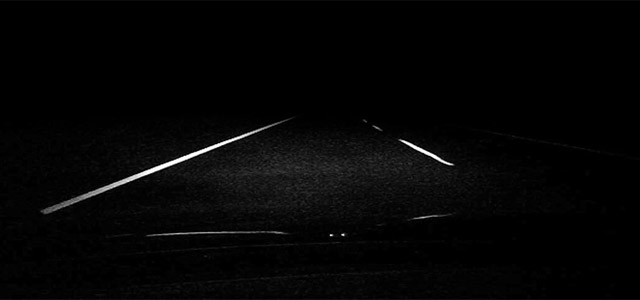
 Last night I had a dream that I was driving rather fast on a highway. I don't remember where I was going or why, and I was alone. The road grew dark, and it became very quiet in the car, but still I was moving. There were no other cars on the road; nothing on the sides of the road; no stars or moon above, just pure darkness outside.
I could only see a short distance ahead, which was quite frightening, but I also feared that if I slowed down something terrible might happen. I woke with a start.
I'm not one to assign meanings to dreams; I tend to think they reflect an overall mood or state of mind rather than a direct message. But this morning I couldn't shake the dream. I kept coming back to it.
Then it struck me that the dream is kind of a metaphor for the journey I'm taking with C: it can be frightening, isolating, claustrophobic, with no clear understanding of a destination, leaving only the thought that slowing down—giving up—is not an option.
And so on we go.
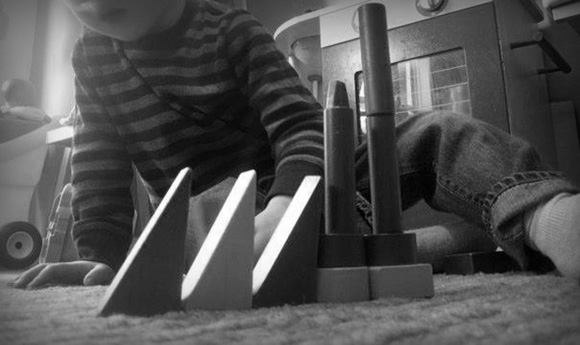 When we first began to notice C lining or stacking things in neat rows and piles — toys, blocks, food — we were concerned; it's one of "the signs" parents are told to watch for, one more thing to worry over. Accompanying the ordering of objects was the eventual meltdown if they fell apart or weren't just so. Another sign.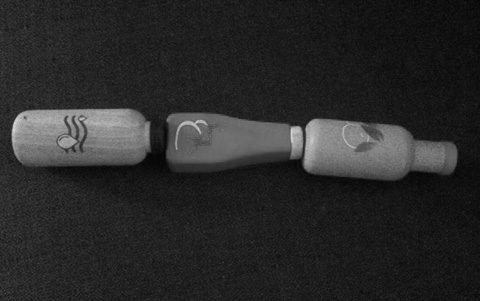
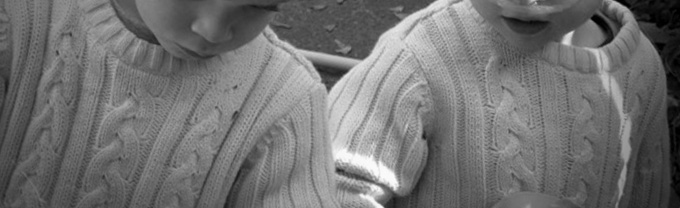 Our twins, M and C, have been together since inception, near each other always, except for brief stints when C was hospitalized for lung disease.
 One of the more surprising aspects of being the parent of a child with special needs is the reaction — or lack thereof — of close friends: people I believed would be there for us have faded into the background. At the same time, other people — some new and some old — have come forward in remarkable and wondrous ways.